
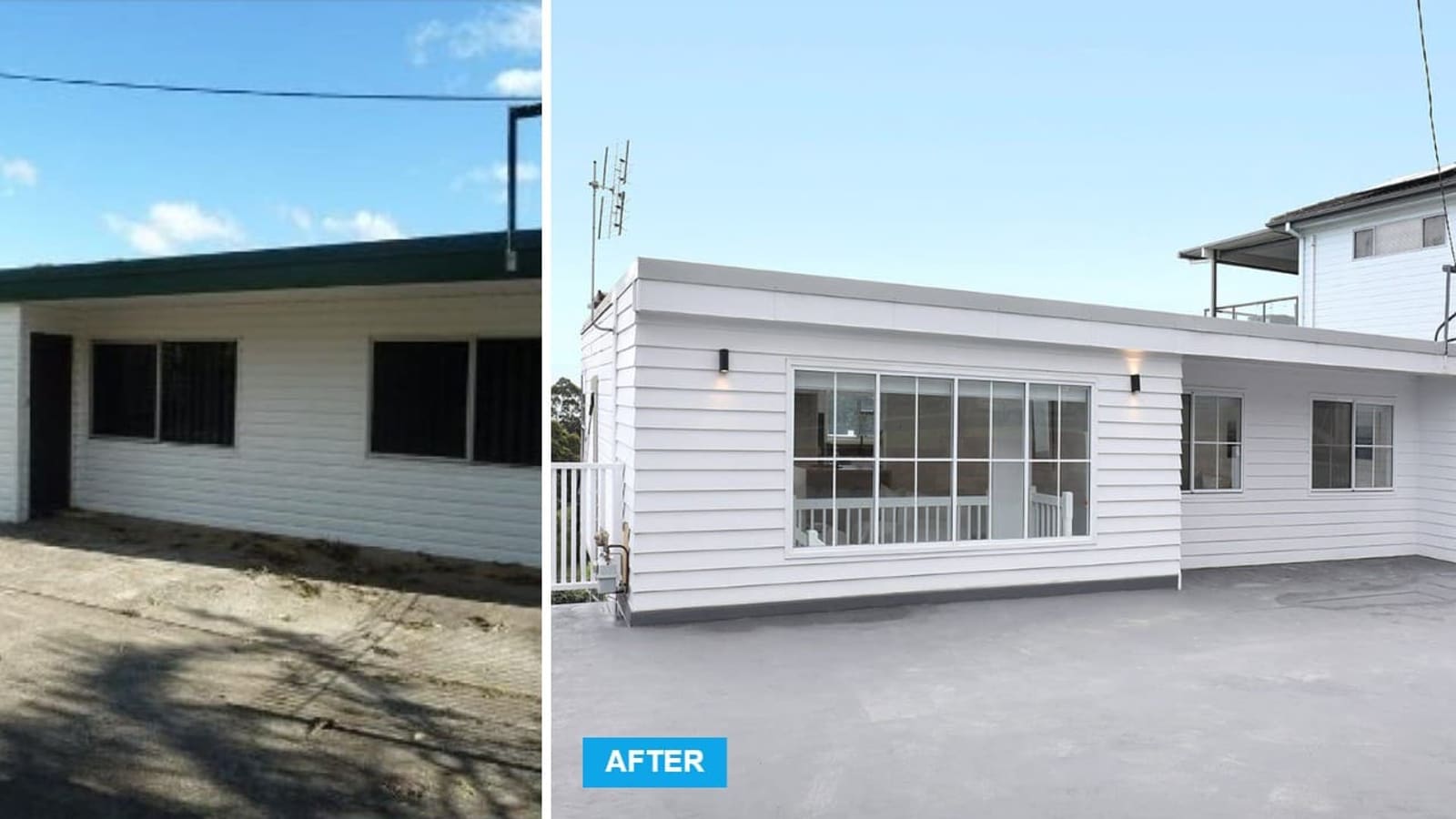
The house has been good to you, but it is honest about its age. The bathroom is original, the deck has a soft board or two, the kitchen doors have stopped closing properly and there is a stain on the ceiling you have learned not to look at. Now you need to sell, and the question you have typed into Google is some version of: can you sell a house that needs repairs, or do you have to fix it first?
You can sell it. People do every week. The real question is not whether, but which repairs are worth doing before the campaign, which ones you disclose and leave, and how to pay for the work if the cash is tied up in the house itself. This article is how a builder thinks through it.
Selling a house that needs work: the buyer-objection test
Not every defect costs you the same way. Some remove buyers from the room. Others just move the price. Sorting your list into those two groups is the single most useful thing you can do before spending a dollar.
Defects that remove buyers are the ones that make someone stop trusting the house. Active water leaks, termite damage, a roof that is letting water in, wiring a building inspector will flag, a subfloor with drainage problems, cracking that suggests movement. A buyer who finds one of these does not lower their offer; they go to the next open. Their lender may also refuse to fund a purchase that turns up structural or safety issues in the report.
Defects that only move price are the ones a buyer can see, understand and cost. An old kitchen. Worn carpet. A dated bathroom that works. Faded paint. A tired garden. These are negotiated, not walked away from. The buyer prices them, usually generously in their own favour, and makes an offer with that number already taken off.
The test is simple. For each item on your list ask: would a reasonable buyer see this as a reason to say no, or a reason to pay less? Fix the first group. Decide about the second.
What to fix
Start with everything that failed the objection test. A house that needs work sells on trust, and trust is built by removing the reasons to doubt it.
- Water. Roof leaks, flashing, gutters, downpipes that discharge against the house, leaking taps and waste pipes, a shower that has been leaking into the wall. Water is the most common source of the "walk away" defect.
- Timber and pests. Rot in decks, window frames and fascias. Any sign of termite activity gets a pest inspection first and treatment before anything else.
- Electrical and gas. Anything unsafe or non-compliant, done by a licensed trade with a certificate you can hand to the buyer.
- Structure and safety. Balustrades that are loose or too low, stairs that move, cracked or lifting tiles someone could trip on.
- Things that do not work. Doors that do not latch, windows that do not open, a range hood or exhaust fan that is dead. Small, cheap, and each one chips at a buyer's confidence.
Then, if the numbers support it, move into the second group in order of what buyers in your suburb notice first: paint, floors, then kitchen and bathroom presentation. Paint is almost always the starting point; we explain why in why paint is the highest ROI job before you sell.
What to disclose
In New South Wales the vendor's contract for sale comes with prescribed documents, and there are things a seller must not conceal. What is required, and how known defects should be handled in the contract, is a question for your solicitor or conveyancer, not your builder. Talk to them before the campaign starts, not after an offer is on the table.
From the building side, the practical rule is that hiding a defect never works for long. A buyer's building and pest inspector will find the patched ceiling stain and ask what is behind it. If you have had a problem fixed properly, keep the invoices and the certificates and put them in the buyer's hands. A repaired leak with paperwork is a non-issue. A freshly painted patch with no explanation is a red flag, and it makes the inspector look harder at everything else.
What to leave
Some things are better left alone and priced accordingly.
- The kitchen or bathroom a buyer will rip out anyway. If the house is in a street where buyers renovate on arrival, a new kitchen is money spent on someone else's demolition. A clean, working, resurfaced kitchen is usually the better call; see our three-question kitchen rule.
- Layout changes. Removing walls or adding rooms is renovation, not preparation. Rarely justified for a sale.
- Anything that would only reflect your taste. Buyers pay for neutral. They do not pay for your feature wall.
- Cosmetic jobs in a house you are selling as a knock-down or a site. If the land is the value, spend on clearing, not on carpet.
There is a useful way to think about the whole exercise in don't renovate to sell, optimise.
Sell house as is or fix up: three honest options
Every house that needs work sits somewhere on a line between selling exactly as it stands and preparing it fully. The place to stand on that line is set by the Sale Gap: the difference between what the house would sell for today and what it would sell for once the right works are done. We describe the idea properly in the Sale Gap, and you can get a first feel for yours with the Sale Gap calculator.
Selling as is. Fastest, cheapest, and the right choice when the buyer pool is renovators or developers, when the house is being sold for its land, or when there is genuinely no time. You accept that buyers will price every defect they see, and they price conservatively. The risk is a smaller pool of buyers and a campaign that stalls if the first inspection report turns up the walk-away defects above.
Targeted repairs. Fix the objection-test failures, paint, tidy the outside, and stop. This is the most common answer for a solid house that is simply tired. It keeps the mainstream buyer in the room, the family who wants to move in and live there, without spending on things they would change anyway.
A fuller pre-sale renovation. Repairs, paint, floors, kitchen and bathroom resurfacing, styling and photography, sequenced by one project manager against the listing date. Right when the Sale Gap is large: the house has good bones and a good street, but has not been touched in a long time and buyers in that suburb are paying for finished homes. Wrong when the gap is small, because you are spending to reach a price the market was going to pay anyway.
None of these is the correct answer for every house. The correct answer is the one where the cost of the works sits comfortably inside the Sale Gap they close, with room to spare. If a builder cannot show you that logic for your house, they are guessing.
Funding the work when the money is in the house
This is the point where many sellers stop. The equity is real but it is locked up until settlement, and nobody wants to borrow against a house they are about to sell just to paint it.
A few paths people take, each with trade-offs to discuss with your own advisers:
- Cash or savings, if you have them, which keeps things simple.
- A short-term arrangement with your lender, which is a conversation for your bank or broker, not for us.
- A builder who defers the cost to settlement. Some builders, Uplifta among them, run the works under a standard building contract with payment timed to settlement. On eligible projects the cost is deferred to settlement under your contract; eligibility and conditions apply. Uplifta is a builder, not a lender, and does not give financial advice, so the decision about whether it suits your position is one to make with your accountant or solicitor.
Whichever way you fund it, run the numbers against doing nothing at all, including holding costs and a longer campaign. We have laid that out in the cost of doing nothing.
Where Uplifta fits
Uplifta prepares houses for sale across Wollongong, the Illawarra and the South Coast. For a house that needs work, our job is to run the buyer-objection test with you, tell you plainly which repairs must happen, which are worth doing, and which to leave, and then run the trades under one project manager so the house is ready for photography on the date the agent needs it.
That starts with a free property review. We walk the house, assess the Sale Gap, and give you a scope you can take to your agent and your solicitor. If the works stack up, we run them as a pre-sale renovation. On eligible projects the cost is deferred to settlement under your contract; eligibility and conditions apply. The details are on our renovate now, pay at settlement page and in the FAQ.
If you are staring at a list and do not know which half matters, book a free property review and we will sort it with you.
Curious what your home's Sale Gap is?
We measure it onsite and rank the works with indicative costs. On eligible projects the cost is deferred to settlement under your contract; eligibility and conditions apply.
Discover Your Sale GapRead next
What Not to Do Before Selling Your House, Nine Mistakes
The mistakes builders and agents see repeatedly before a sale, why each one costs money, and what to do instead. Doing less, done well, usually wins.
What Adds Value to a House in Australia, and What Doesn't
The improvements that lift a sale price, ranked by speed, return, cost and buyer psychology, plus the things that quietly devalue a house and what to do instead.
Should You Renovate the Bathroom Before Selling?
A builder's three-question rule for deciding whether your bathroom needs a refresh, a full strip-out, or nothing at all before the house goes to market.
Free tools: estimate your Sale Gap, see what going to market as-is could cost with the Cost of Doing Nothing tool, or read how Uplifta works.
Back to all articles