
Ask most homeowners what their property is worth and they will give you one number. It can help to think in terms of two.
The first is what it would likely sell for today, as it stands — with the tired paint, the leaking tap, the dated bathroom, the garden that got away over winter.
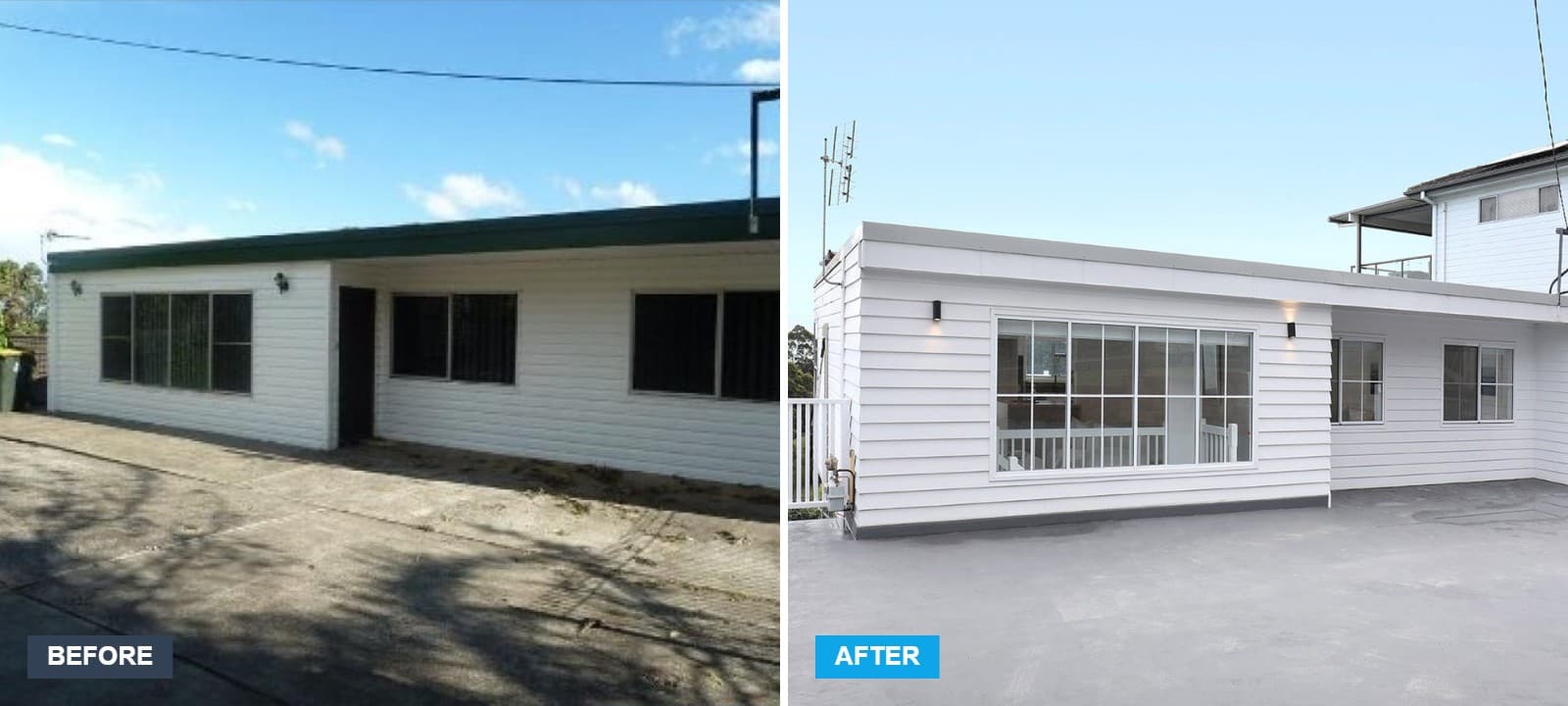
The second is an estimate of what it could sell for once it has been properly prepared — repaired, refreshed, and presented so that buyers see its potential rather than its accumulated wear.
The difference between those two figures is what we call the Sale Gap. For many homes it can be one of the larger sums an owner has a chance to influence — and many sellers never put a number on it. That is what we mean when we say: don't leave money on the table. Both figures are estimates; the point is to reason about them with evidence, not to treat either as a guaranteed price.
Investors have long drawn the same distinction between what something trades for and what it is actually worth.
"Long ago, Ben Graham taught me that 'Price is what you pay; value is what you get.'"
— Warren Buffett, Chairman and CEO of Berkshire Hathaway, 2008 letter to shareholders
Selling a home runs that distinction in reverse: buyers pay for the value they can see on inspection day. The Sale Gap is the value they can't.
Why the Sale Gap exists
The Sale Gap is a branded way of describing something grounded in how buyers tend to behave.
Buyers can overprice problems. A buyer who spots a damp patch may not deduct the cost of a plumber. What they deduct instead is the worst case they imagine, plus a margin for the stress of dealing with it. Small, cheap-to-fix issues can cost sellers more at negotiation than they would have cost to resolve.
Buyers can find it hard to see past clutter and wear. Many buyers respond to what is in front of them on inspection day rather than to what a home could become. A dark, cluttered, tired home can read as a project; the same home, refreshed and well presented, can read as a lifestyle. Same floorplan, potentially very different offers.
Buyers tend to pay for confidence. A home that presents as cared-for suggests the ownership has been diligent — that there are fewer surprises waiting in the building report. Confidence can bring buyers to auction, keep them in negotiations, and support stronger offers. Doubt can do the opposite.
Emotion often sets the ceiling; condition tends to set the floor. Logic tells a buyer roughly what a home is worth; emotion is often what makes them stretch. Homes that trigger genuine buyer emotion — pride, excitement, a sense of "this is the one" — can outperform their comparables. Homes that trigger doubt can get anchored to the bottom of the range.
What the Sale Gap is not
Closing the Sale Gap is not the same as renovating. The distinction matters.
A renovation is done for living. Sale optimisation is done for selling — and it follows different rules. Improvements are worth making only if buyers in your suburb, at your price point, are likely to pay for them. A new kitchen might be essential in one street and money wasted in the next. An expensive extension can add less than it costs. Sometimes the smartest recommendation is to do less, not more.
That is why the process starts with assessment, not with a trade quote. We assess a property across five dimensions — maintenance, presentation, functionality, buyer appeal and market position — before recommending anything. The question is never "what could be improved?" (everything could). It is "which specific works are likely to change what a buyer decides and pays?"
How the gap gets closed
Once the Sale Gap is estimated, the works that address it tend to follow a deliberate order — what we call the 4R sequence:
Repair — remove the reasons to say no. Leaks, cracks, rot, broken fittings, safety issues.
Refresh — win the first impression. Paint, floors, lighting, gardens, facade.
Refine — improve the buyer's experience of the home. Flow, storage, light, the way each room reads and functions.
Reveal — showcase the strengths. Styling, decluttering, and presentation that puts the home's best features in the foreground.
Each stage builds on the one before it. Styling a home that still has visible maintenance issues can be decoration over doubt. Repairing everything but presenting poorly can leave the emotional ceiling untouched. The sequence is much of the point — though the right emphasis varies by home. (For the full framework, see our pillar guide on the 4R sequence.)
Why many sellers never close the gap
If the Sale Gap is real, why do so many homes go to market unprepared? In our experience it comes down to three barriers.
Cash flow. Much of a homeowner's wealth is often in the house itself. Finding money for works before the sale — at the exact moment they are budgeting for the next purchase — is hard. This is why our model can defer the cost of works to settlement under the building contract, so the works are paid for out of the sale they helped create (eligibility and conditions apply).
Coordination. Getting quotes, sequencing trades, managing quality and hitting a listing deadline is a project-management job. Most sellers are already juggling work, family and the move itself.
Objectivity. After years in a home, owners can stop seeing it. The worn carpet becomes invisible; the odd-shaped third bedroom feels normal. Buyers tend to notice all of it quickly. A property-preparation assessment aims to see the home the way the market will.
The first step
You can't work on a gap you haven't estimated. Before you list — ideally two to three months before — it's worth getting a considered view of what your home would likely sell for as it stands, what is holding that number down, and which specific works would be most likely to change it.
Then decide with evidence, not guesswork. That is Property Sale Optimisation.
UPLIFTA example — 35 Hassan Street, Lake Heights. Starting appraisal: $710,000. Works budget: $112,000. Sale result: $988,000 — a gross uplift of $278,000, about 2.5× the works spend. (Figures shown are the pre-works appraisal, the works budget and the achieved sale result for this project; individual outcomes vary with the property and market.)
Sources & notes
- UPLIFTA methodology — the Sale Gap, the five-dimension assessment and the 4R sequence (UPLIFTA Operating Manual).
- Warren Buffett, letter to Berkshire Hathaway shareholders, 2008, p. 5 — the "price is what you pay; value is what you get" maxim, which Buffett credits to Benjamin Graham: berkshirehathaway.com/letters/2008ltr.pdf
- On buyers over-weighting problems: this tendency is consistent with loss-aversion research — Kahneman, D. & Tversky, A. (1979), "Prospect Theory: An Analysis of Decision under Risk", Econometrica 47(2); see the summary at behavioraleconomics.com.
- On household wealth: residential land and dwellings are the largest component of Australian household wealth — ABS, Australian National Accounts: Finance and Wealth, March quarter 2026 (abs.gov.au). As at June 2026; confirm current figures.
- Note: the two prices are estimates, not measured values; figures are labelled precisely (appraisal, budget, sale result) rather than presented as guaranteed outcomes.
This article is general information only and is not financial, legal or tax advice. Every property is different; outcomes depend on the individual home and market conditions.
UPLIFTA is a Property Sale Optimisation company based in the Illawarra, NSW. We carry out a property-preparation assessment, prepare a prioritised scope of works, and project-manage the improvements — with the cost of works deferred to settlement under your contract (eligibility and conditions apply). 1300 131 123 · info@uplifta.com.au · uplifta.com.au
Curious what your home's Sale Gap is?
We measure it onsite and rank the works with indicative costs. On eligible projects the cost is deferred to settlement under your contract; eligibility and conditions apply.
Discover Your Sale GapRead next
What Not to Do Before Selling Your House, Nine Mistakes
The mistakes builders and agents see repeatedly before a sale, why each one costs money, and what to do instead. Doing less, done well, usually wins.
What Adds Value to a House in Australia, and What Doesn't
The improvements that lift a sale price, ranked by speed, return, cost and buyer psychology, plus the things that quietly devalue a house and what to do instead.
Should You Renovate the Bathroom Before Selling?
A builder's three-question rule for deciding whether your bathroom needs a refresh, a full strip-out, or nothing at all before the house goes to market.
Free tools: estimate your Sale Gap, see what going to market as-is could cost with the Cost of Doing Nothing tool, or read how Uplifta works.
Back to all articles