
Kitchens are where pre-sale budgets go to die.
An owner decides the kitchen "has to be done", a designer gets involved, and $45,000 later the home sells for what a $6,000 refresh would have achieved — because the ceiling never moved.
Our framework runs four levels of intervention — Repair, Refresh, Refine, Reveal — and the kitchen is where choosing the right level matters most. Here is the test we use.
Question 1: Are the carcasses sound?
Open a door and look at the box, not the front. Are the cabinet carcasses square, dry, and free of swelling at the base? Do the drawers run? Is the layout functional for the way people cook now?
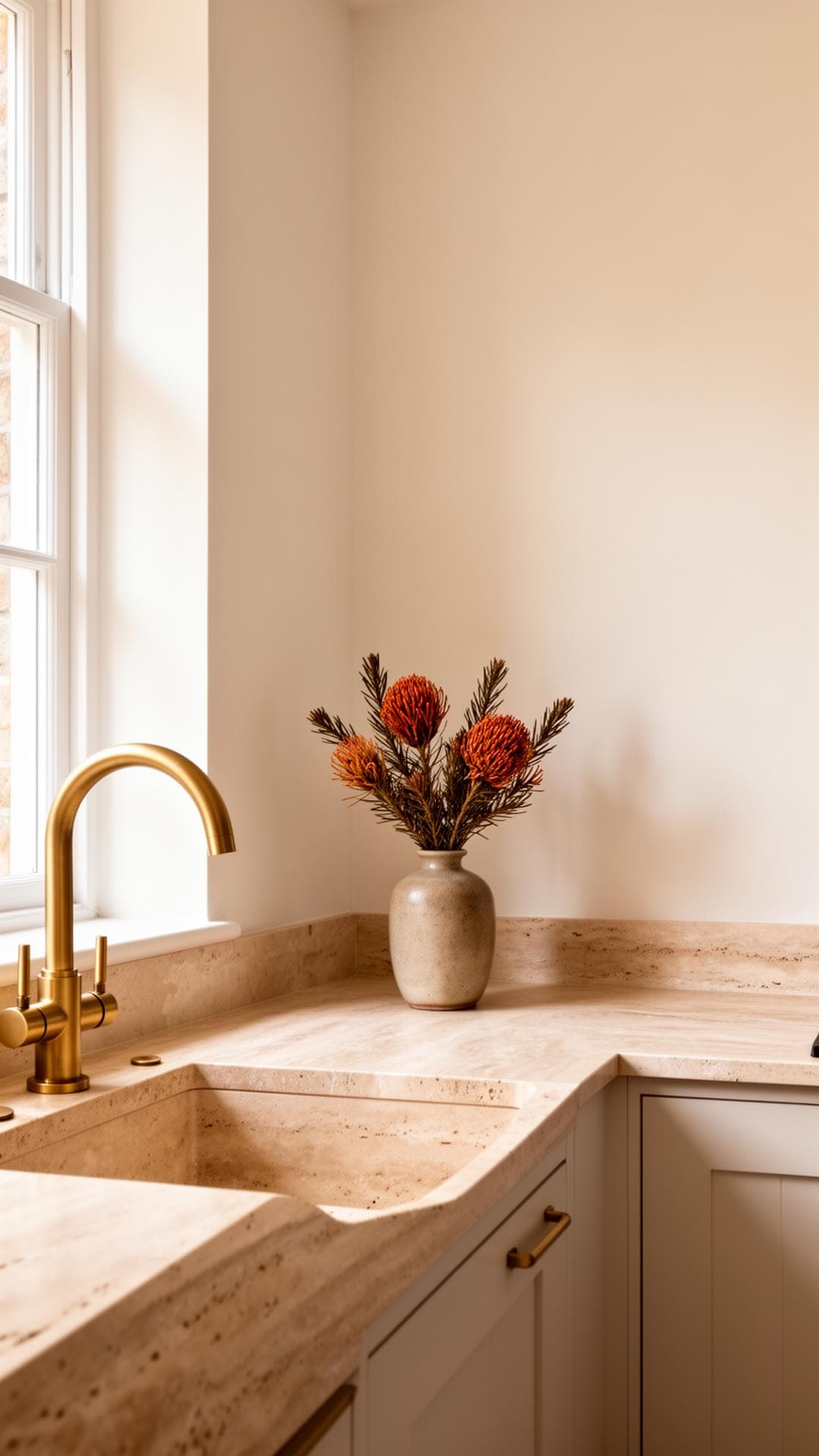
If the bones are sound, you are almost certainly in Refresh or Refine territory: new doors and handles, a benchtop, a splashback, a sink and tap. The expensive, disruptive part of a kitchen — the joinery carcass, the plumbing rough-in, the electrical — stays where it is.
If the carcasses are swollen chipboard, the layout is unworkable, or the plumbing is failing, that is one vote for replacement.
Question 2: What does the ceiling allow?
Look at the last six months of comparable sales in your street and suburb. Not the aspirational listing prices — the settled figures.
Find the top of that range. That is your ceiling. Then ask: does the difference between my likely as-is price and that ceiling comfortably exceed the cost of a full kitchen, with margin left over?
For a large share of homes, the honest answer is no. A $40,000 kitchen in a market where the ceiling is $60,000 above your as-is price consumes two thirds of the available gap and leaves nothing for paint, floors, styling or the outdoor space — all of which are cheaper per point of buyer response.
That is not a renovation. That is a transfer of your equity to a cabinetmaker.
Question 3: Is the kitchen the weakest pillar?
We score six pillars, and the plan always attacks the lowest score first. A dated but clean kitchen in a home with peeling paint, a dark entry and a neglected backyard is not the problem — the buyer's overall impression is.
Money spent on the weakest pillar moves buyer response further than money spent making an already-acceptable pillar excellent. A gleaming new kitchen inside a tired house reads as odd, not premium.
If the kitchen is genuinely the worst thing in the home and the first two questions point to replacement, replace it. That is a rare alignment — perhaps one assessment in five.
What a good refresh actually includes
- Doors and drawer fronts in a current, neutral finish
- New handles (the cheapest single perception lift in the room)
- A benchtop that reads as contemporary — engineered stone or a quality laminate
- A simple splashback, tiled or glass
- A new sink and mixer
- Fresh paint on surrounds and a modern light fitting overhead
Indicative cost sits far below a full rebuild, the work is measured in days rather than weeks, and the room reads as renewed rather than renovated.
The rule, in one line
Replace the kitchen only when the carcasses are gone, the ceiling clearly funds it, and the kitchen is the weakest pillar in the house. Otherwise, refresh it and put the saved budget into paint, light and the outdoor space.
A note on discipline
We describe costs as indicative and we do not promise uplift figures. What we do commit to is the sequence: measure the gap, score the pillars, set a budget cap, and spend only where the numbers survive contact with the comparable sales.
The best kitchen decision is often the one you talk yourself out of.
Curious what your home's Sale Gap is?
We measure it onsite and rank the works with indicative costs. On eligible projects the cost is deferred to settlement under your contract; eligibility and conditions apply.
Discover Your Sale GapRead next
What Not to Do Before Selling Your House, Nine Mistakes
The mistakes builders and agents see repeatedly before a sale, why each one costs money, and what to do instead. Doing less, done well, usually wins.
What Adds Value to a House in Australia, and What Doesn't
The improvements that lift a sale price, ranked by speed, return, cost and buyer psychology, plus the things that quietly devalue a house and what to do instead.
Should You Renovate the Bathroom Before Selling?
A builder's three-question rule for deciding whether your bathroom needs a refresh, a full strip-out, or nothing at all before the house goes to market.
Free tools: estimate your Sale Gap, see what going to market as-is could cost with the Cost of Doing Nothing tool, or read how Uplifta works.
Back to all articles