
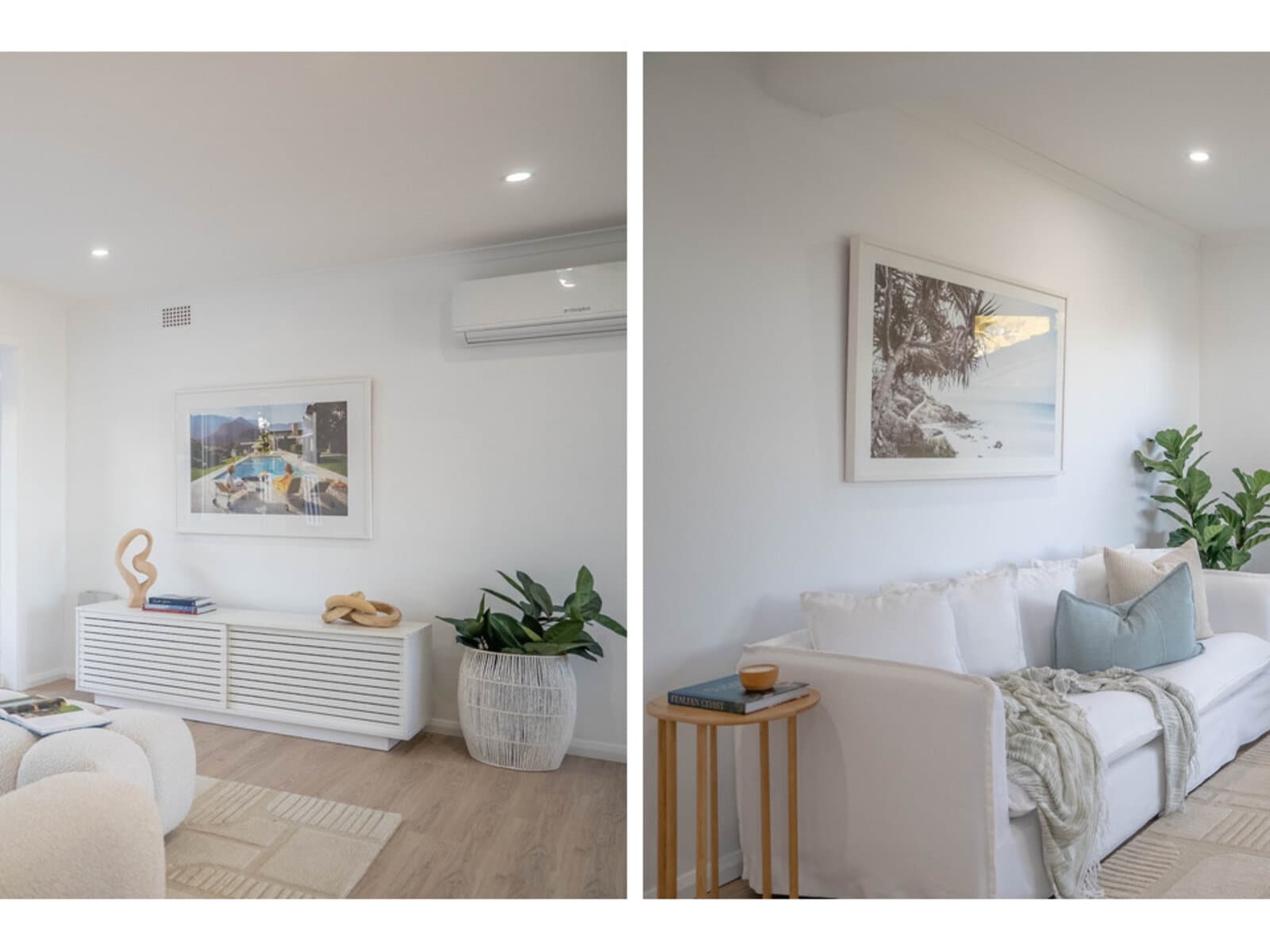
If we could only recommend one job before a sale, it would be paint. Every time.
Not because paint is glamorous. Because of every dollar an owner can spend before going to market, paint is the one that most reliably comes back — and then some.
Buyers don't see paint. They feel it
Walk a buyer through two identical homes. One has fifteen-year-old walls with scuffs at the light switches, yellowed white on the cornices and a hallway that has taken a decade of school bags. The other is freshly painted in a warm neutral with crisp trim.
Ask them what the difference is and most will not say "paint". They will say the second home feels cared for. Newer. Brighter. Bigger.
That feeling is the whole game. The first inspection is an emotional event with a financial outcome, and paint sets the emotional baseline before a buyer has opened a single cupboard.
The maths, honestly
Painting the interior of a typical three-bedroom home is usually a four-figure job — indicative, and dependent on ceiling heights, prep, and how many colours are in play. It's rarely the biggest line on a pre-sale plan.
What it changes is harder to price precisely, which is why we won't promise a number. What we will say is what we consistently see: fresh paint lifts perceived condition across every room simultaneously. No other single trade touches the whole house at once.
It also removes the buyer's most common mental deduction — "we'd have to paint the whole place" — which is almost always overestimated by a factor of three or four in their head.
Where owners get it wrong
Choosing a personal colour. Pre-sale paint is not decorating. It is neutralising. Warm off-whites and soft greys let a buyer project their own furniture onto the walls. A feature wall in charcoal does the opposite.
Skipping the prep. Paint over unfilled cracks and poor patching reads as "quick flip" to anyone paying attention — and buyers pay attention. The prep is most of the labour and most of the result.
Painting only the living areas. Half-painted homes are worse than unpainted ones, because the contrast highlights the tired rooms. If the budget only stretches to part of the house, paint whole zones — never half a hallway.
Ignoring trim, doors and ceilings. Yellowed ceilings and scuffed skirting undermine fresh walls. The upgrade is felt when the whole envelope is consistent.
Paint plus light
Paint's closest ally is light. A freshly painted room with a warm 2700K globe, clean windows and the blinds fully open photographs and inspects dramatically better than the same room lit by a single dim bulb.
Replacing dated globes and cleaning glass costs almost nothing and compounds the paint result. In our framework these sit in the same pillar for exactly this reason — they are read by the buyer as one impression.
When paint is not the answer
If a home has structural issues, water damage, or a genuinely failing kitchen, paint alone is lipstick. The Sale Gap assessment exists to catch that: paint is the first recommendation in most plans, but it is not the only recommendation in all of them.
And if a property already sits at its ceiling and presents well, the honest advice remains: don't spend.
The short version
Paint is cheap relative to its effect, touches every room, removes the buyer's largest imaginary deduction, and carries almost no execution risk when it's prepped properly.
If you do one thing before you sell, do that.
Costs referenced are indicative only. Every property differs, and no uplift is guaranteed.
Curious what your home's Sale Gap is?
We measure it onsite and rank the works with indicative costs. On eligible projects the cost is deferred to settlement under your contract; eligibility and conditions apply.
Discover Your Sale GapRead next
What Not to Do Before Selling Your House, Nine Mistakes
The mistakes builders and agents see repeatedly before a sale, why each one costs money, and what to do instead. Doing less, done well, usually wins.
What Adds Value to a House in Australia, and What Doesn't
The improvements that lift a sale price, ranked by speed, return, cost and buyer psychology, plus the things that quietly devalue a house and what to do instead.
Should You Renovate the Bathroom Before Selling?
A builder's three-question rule for deciding whether your bathroom needs a refresh, a full strip-out, or nothing at all before the house goes to market.
Free tools: estimate your Sale Gap, see what going to market as-is could cost with the Cost of Doing Nothing tool, or read how Uplifta works.
Back to all articles