
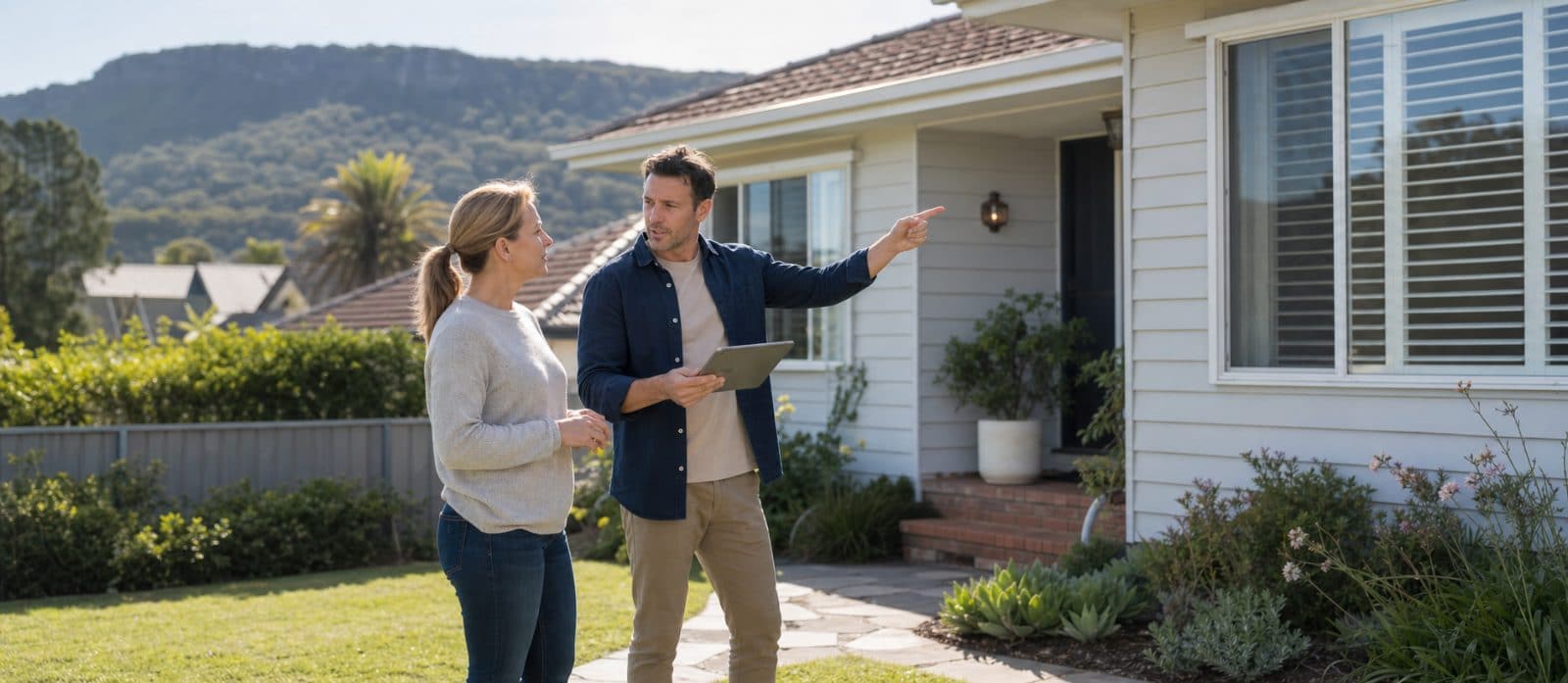
Spring is typically the busiest selling season in the Illawarra. Gardens recover, the escarpment turns green, the light improves, and buyers who paused over winter come back to open homes.
Being the busiest season is not the same as being the easiest, though. In 2026 you are unlikely to be the only one listing — this spring is shaping up as a competition between homeowners as much as a queue of buyers (see the snapshot below). That makes preparation a deciding factor: a home that goes to market genuinely ready can stand out against a large field of homes that don't. Here is how to use the weeks you have.
First: decide your timeline honestly
Good preparation usually takes longer than homeowners expect. Trades need to be booked, paint needs to dry, gardens need time to establish, and photography should be the last step, not an afterthought. If your home needs meaningful work, a late-spring or even early-summer campaign with the work done well will often serve you better than an early-spring campaign with the work half-done. Momentum matters — but mainly once you are actually ready.
Weeks 1–2: assess before you spend
Resist the urge to start painting on day one. Walk your home the way a buyer would — start at the kerb, phone camera in hand, and photograph everything that catches your eye for the wrong reason. Better still, get a property-preparation assessment. You are looking for answers to three questions:
- What might make buyers hesitate? (maintenance, damage, safety, signs of neglect)
- What might make buyers underestimate the home? (clutter, dated surfaces, poor light, tired presentation)
- What are the strengths buyers should notice immediately — and what is currently hiding them?
Everything from here should trace back to one of those three answers. Work that doesn't change a buyer's perception is money spent, not money invested.
Weeks 2–5: repair — remove the reasons to say no
Buyers and building inspectors tend to look for the same things. Deal with them before they become negotiation ammunition:
- Leaking taps, running toilets, water stains and any signs of damp
- Cracked tiles, broken windows, doors and drawers that stick or don't close
- Gutters, downpipes and roof issues — highly visible from the street and in reports
- Electrical safety items, smoke alarms, loose fittings and handrails
- Rotten timber on decks, fascias and window frames
- Fence, gate and driveway damage
None of this is glamorous, and that is rather the point: buyers rarely pay extra for a home that is merely functional, but they can heavily discount one that isn't. Remember that in NSW electrical, plumbing, gas and structural work must be carried out by appropriately licensed trades, whatever the size of the job. Residential building work worth more than $5,000 (labour and materials) requires a written contract, and work over $20,000 also requires the contractor to hold Home Building Compensation cover.
Weeks 4–7: refresh — win the first impression
With the doubts addressed, shift to the layer buyers respond to first:
- Paint — often the highest-impact refresh in a home. Neutral, light, consistent.
- Street appeal — the facade, front door, letterbox, path and front garden set expectations before a buyer steps inside. Spring can help here: plant early so everything is established by photo day.
- Floors — clean carpets professionally or replace where worn; sand and re-coat tired timber where it earns its keep.
- Lighting — replace dated fittings, maximise natural light, clean every window inside and out.
- Kitchens and bathrooms — before assuming they need replacing, price the refresh: new tapware, handles, regrouting, resealing and paint can shift how a room reads for a fraction of a renovation.
Weeks 6–8: refine and reveal — shape the buyer's experience
The final fortnight is about how the home feels to walk through:
- Declutter thoroughly — surfaces, wardrobes, garage. Storage that looks full can read as "not enough storage."
- Depersonalise enough that buyers can imagine their own life in the rooms.
- Fix the flow: remove excess furniture, open sightlines, let every room state its purpose clearly.
- Consider professional styling — particularly for vacant homes, which can photograph and inspect poorly when empty.
- Only now book photography, and shoot in good light. Your online listing is, in effect, the first inspection; many buyers decide whether to visit based on a handful of photos and a floorplan.
What to skip
Just as important as the list above is what is not on it. Major structural work, extensions and full-scale renovations rarely belong in a sale-preparation plan — the timelines are long, the costs are high, and buyers may not pay for your choices. If a big-ticket item genuinely stands between your home and its market, that decision deserves proper assessment and pricing, not a spring-cleaning impulse.
The Illawarra angle
Local buyers this spring are weighing lifestyle against tighter budgets. Cotality's research director, Tim Lawless, expects regional conditions to "slow, possibly even move into reverse through the second half of the year" — which, if it plays out, would leave buyers with more choice and less urgency. Homes that present as easy — nothing to fix, nothing to do, move straight in — can speak directly to that mindset. In a region where the median dwelling value has recently sat above $1 million, the difference between a home that is ready and one that is "mostly ready" is unlikely to be a rounding error.
Spring tends to reward the prepared. Start now, work in a sensible order, and let the season do what it does best — show your home in good light.
UPLIFTA example — 35 Hassan Street, Lake Heights. Starting appraisal: $710,000. Works budget: $112,000. Sale result: $988,000 — a gross uplift of $278,000, about 2.5× the works spend. (Figures shown are the pre-works appraisal, the works budget and the achieved sale result for this project; individual outcomes vary with the property and market.)
Market snapshot — as at 27 August 2026
These figures date quickly. Confirm current numbers with the primary sources before relying on them.
- Illawarra median dwelling value: reported above $1 million through mid-2026. (Source: Cotality via Illawarra Mercury.)
- Advertised stock: advertised stock levels across the region were reported around 11.5% above the decade average for this time of year in mid-2026. (Source: Cotality via Illawarra Mercury.)
- Conditions: Cotality expects regional conditions to slow — possibly easing further — through the second half of 2026.
Sources & notes
- Illawarra Mercury / Cotality — regional median value, stock levels and outlook (July 2026): illawarramercury.com.au
- NSW Fair Trading — home building contracts (written contract over $5,000; Home Building Compensation cover over $20,000): fairtrading.nsw.gov.au
- NSW Government — categories of building and trade work requiring a licence (electrical, plumbing, draining and gasfitting at any value): nsw.gov.au
- Seasonal listing patterns — spring typically brings the year's largest lift in new listings in NSW: openagent.com.au
This article is general information only and is not financial, legal or tax advice.
UPLIFTA is a Property Sale Optimisation company based in the Illawarra, NSW. We carry out a property-preparation assessment, prepare a prioritised scope of works, and project-manage the works — with the cost of works deferred to settlement under your contract (eligibility and conditions apply). 1300 131 123 · info@uplifta.com.au · uplifta.com.au</result>
Curious what your home's Sale Gap is?
We measure it onsite and rank the works with indicative costs. On eligible projects the cost is deferred to settlement under your contract; eligibility and conditions apply.
Discover Your Sale GapRead next
What Not to Do Before Selling Your House, Nine Mistakes
The mistakes builders and agents see repeatedly before a sale, why each one costs money, and what to do instead. Doing less, done well, usually wins.
What Adds Value to a House in Australia, and What Doesn't
The improvements that lift a sale price, ranked by speed, return, cost and buyer psychology, plus the things that quietly devalue a house and what to do instead.
Should You Renovate the Bathroom Before Selling?
A builder's three-question rule for deciding whether your bathroom needs a refresh, a full strip-out, or nothing at all before the house goes to market.
Free tools: estimate your Sale Gap, see what going to market as-is could cost with the Cost of Doing Nothing tool, or read how Uplifta works.
Back to all articles